Governments in the EU, North America, and across Southeast Asia are accelerating single-use plastic bans. Retailers and food brands are switching to certified compostable packaging at a pace that didn't exist three years ago. And behind every compostable bag on a supermarket shelf, there is a machine that made it.
If you're researching compostable or biodegradable bag making machines — whether you're a packaging manufacturer exploring a new production line, or an entrepreneur entering the eco-friendly bag market — this guide walks through the key decisions: materials, machine types, certifications, and supplier evaluation.
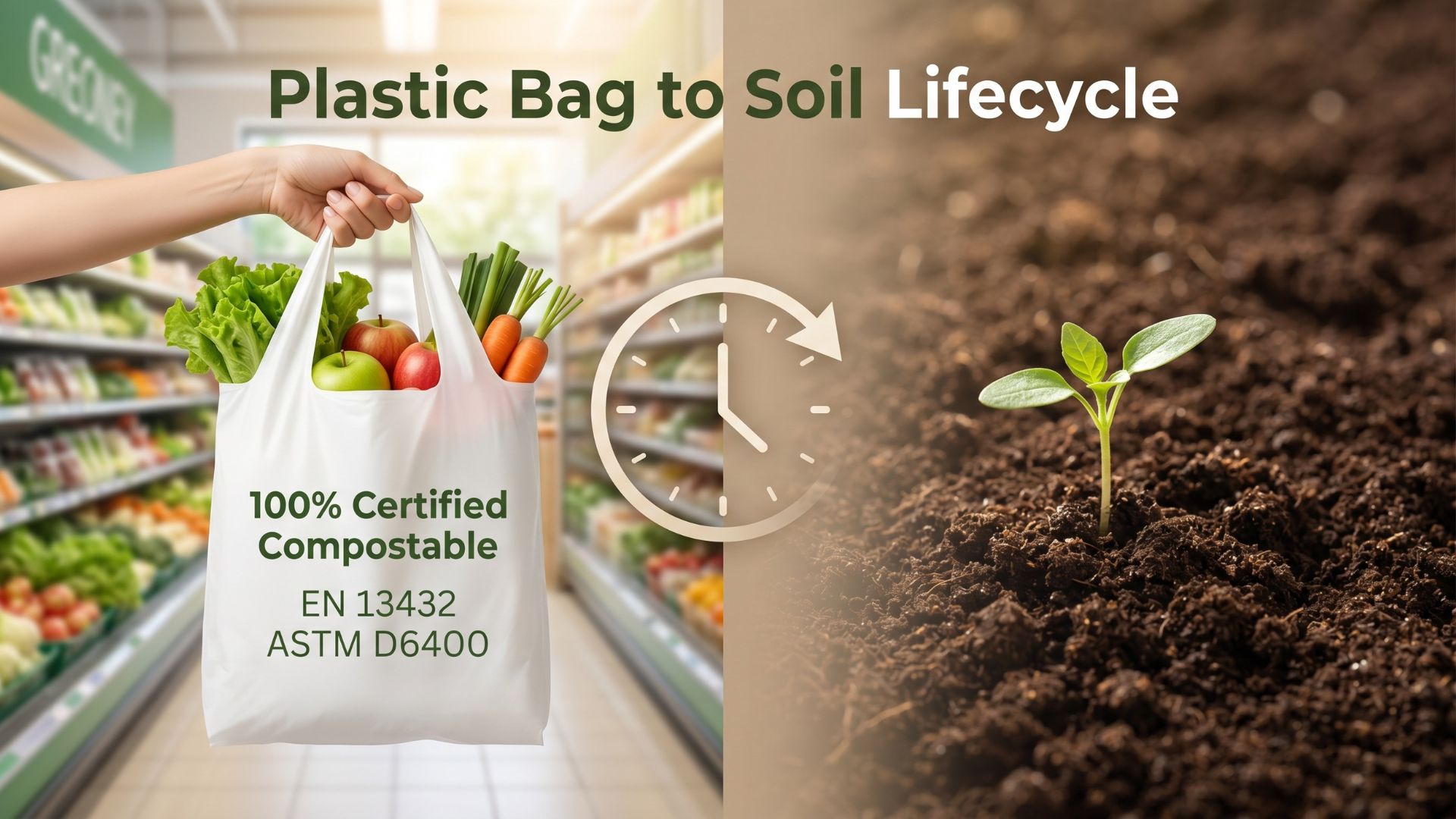
Before evaluating any machine, it helps to understand what distinguishes compostable and biodegradable bags — because the terms are often used interchangeably but carry different technical meanings.
Biodegradable means the material can be broken down by microorganisms over time. But without a defined timeframe or conditions, the term is broad. A PE bag technically biodegrades, given several centuries in the right conditions.
Compostable is the more rigorous standard. EN 13432:2000 (published by CEN, the European Committee for Standardization) and ASTM D6400 (ASTM International) are the two benchmarks that most regulated markets recognize. Both require that a product achieve at least 90% biodegradation within 180 days under industrial composting conditions, leave no toxic residues harmful to soil quality, and contain heavy metals below specified limits.
For buyers producing bags intended for the European or North American market, "compostable" with third-party certification — verified by bodies such as BPI, TÜV Austria, or DIN CERTCO — is increasingly the baseline requirement, not just "biodegradable."
Your machine choice must align with this distinction, because the materials used for each category are processed very differently.
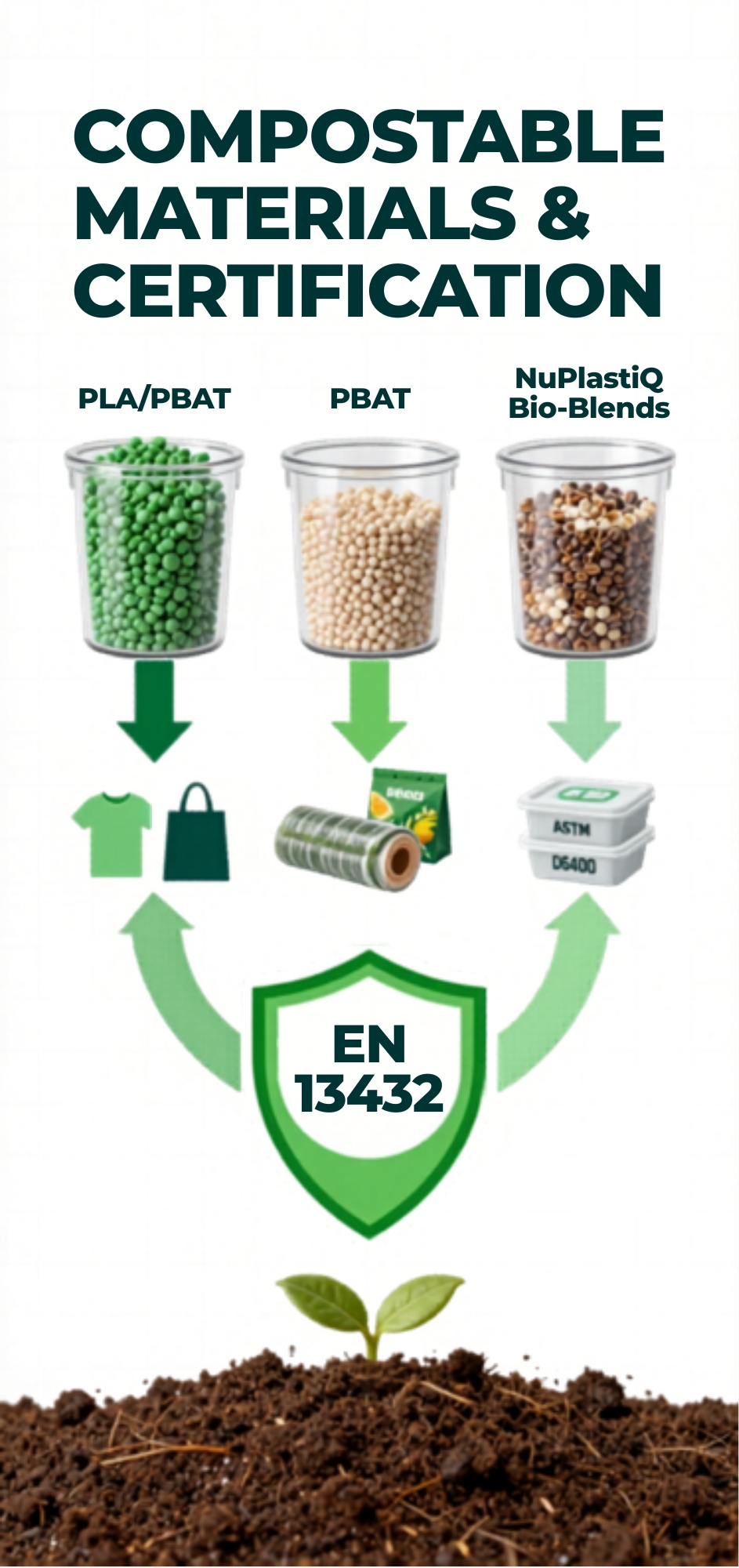
The landscape of eco-friendly bag materials has expanded considerably in recent years. Understanding the main categories — and their processing demands — is the foundation of any machine selection decision.
These are polymer materials that can decompose into water, carbon dioxide, and organic matter under the right conditions, without leaving permanent microplastic residues.
PLA is derived from fermented plant starch — typically corn or sugarcane — and is one of the most widely certified compostable materials globally.
Key processing characteristics:
PLA is best suited for shopping bags, produce bags, food packaging bags, and carry bags where moderate stiffness is acceptable.
PBAT is petroleum-derived, but certified biodegradable under industrial composting conditions. Its flexibility and elongation make it the critical component for bags that need to stretch and resist tearing.
Key processing characteristics:
The vast majority of commercially produced compostable bags use a blend — most commonly 40–60% PLA combined with 40–60% PBAT. This ratio delivers adequate tensile strength, sufficient flexibility, and compostability under both EN 13432 and ASTM D6400 conditions when the base resins are certified.
The specific blend ratio affects processing temperature, screw speed, cooling requirements, and sealing parameters. A machine that hasn't been configured and tested for bio-film blends will produce inconsistent results.
PHA is a family of biodegradable polyesters synthesized by microorganisms from organic feedstocks. Unlike PLA, certain PHA grades can biodegrade in both industrial composting and marine environments, giving it regulatory advantages in markets with stricter end-of-life requirements.
Processing PHA presents its own challenges: it has a narrow processing window similar to PLA, carries a higher raw material cost than PLA/PBAT blends, and supply availability varies by region. For most manufacturers entering the compostable bag market, PLA/PBAT blends remain the more practical starting point, with PHA considered for premium or specialized applications.
It is worth noting that "compostable material" is not a specific polymer — it is a performance classification. PLA, PBAT, PHA, and certain starch-based materials can all qualify as compostable when they meet EN 13432 or ASTM D6400 testing requirements. What unifies them is the certification outcome, not the chemistry. Your machine must be capable of processing the underlying polymer reliably; the certification is earned by the finished product.
Bio-PE and Bio-PET are made wholly or partially from renewable feedstocks such as sugarcane ethanol, but are chemically identical to their fossil-fuel-derived counterparts. This means they are not inherently biodegradable — but they reduce fossil resource consumption and carbon footprint during production.
For machine buyers, Bio-PE and Bio-PET are processed on standard PE or PET bag machines without any special configuration. They do not require the modified temperature controls, tension systems, or pre-drying infrastructure that PLA-based materials demand. If your primary goal is compostability certification rather than bio-based content, Bio-PE and Bio-PET are a different product category.
NuPlastiQ® is a plant-based biopolymer developed by BioLogiQ, Inc. (Idaho Falls, USA). Made through a proprietary thermoplastic starch process, it can be blended with PLA, PBAT, and other resins to produce bags meeting industrial compostability standards under both ASTM D6400 and EN 13432 — certified by TÜV Austria.
One notable characteristic of NuPlastiQ® is that it can also be blended with conventional polyolefins such as PE and PP, making it a flexible additive for manufacturers who want to incrementally improve the sustainability profile of existing products while maintaining processability on standard equipment.
Parkins machines have been tested and validated with NuPlastiQ®-based blends alongside PLA and PBAT. Learn more about the sustainable materials our machines support
Some manufacturers are adopting composite formulations that blend recycled post-consumer plastics (PCR) with bio-based additives. These materials reduce reliance on virgin fossil-based inputs and can improve the recyclability profile of the finished bag — though they do not typically achieve compostability certification.
From a machine perspective, recycled plastic composites often contain contaminants, colour variation, and inconsistent melt flow that require robust screw and barrel design and tighter quality controls compared to virgin resin processing.
Understanding these material differences isn't just background knowledge — it's what determines which machine configuration your production line actually needs. Here's why.
A standard polyethylene bag machine can be adapted for PLA/PBAT film in some cases, but the results are typically inconsistent. Purpose-built or properly configured bio-film machines differ across several critical design elements:
| Design Element | Standard PE Machine | Compostable Bag Machine |
| Barrel temperature range | 160–230°C | 120–180°C (PLA sensitive) |
| Screw geometry | Optimized for LDPE/HDPE melt flow | Modified L/D ratio for bio-resins |
| Temperature control precision | ±5°C acceptable | ±2°C required to avoid degradation |
| Film tension control | Mechanical or basic servo | Precision servo-driven (bio-films tear easily) |
| Sealing system | Standard heat bars | Temperature-calibrated for bio-film melting points |
| Pre-drying system | Not required | Dehumidifying dryer mandatory for PLA |
| Cooling section | Standard | Extended or enhanced for bio-film dimensional stability |
The core challenge is that bio-films have a much narrower processing window. A machine that maintains precise temperature control and tension across the entire production run will consistently deliver seal quality and film integrity that an adapted PE machine cannot match.
Compostable and biodegradable bags cover a wide range of applications. The machine type must match the bag format you intend to produce.
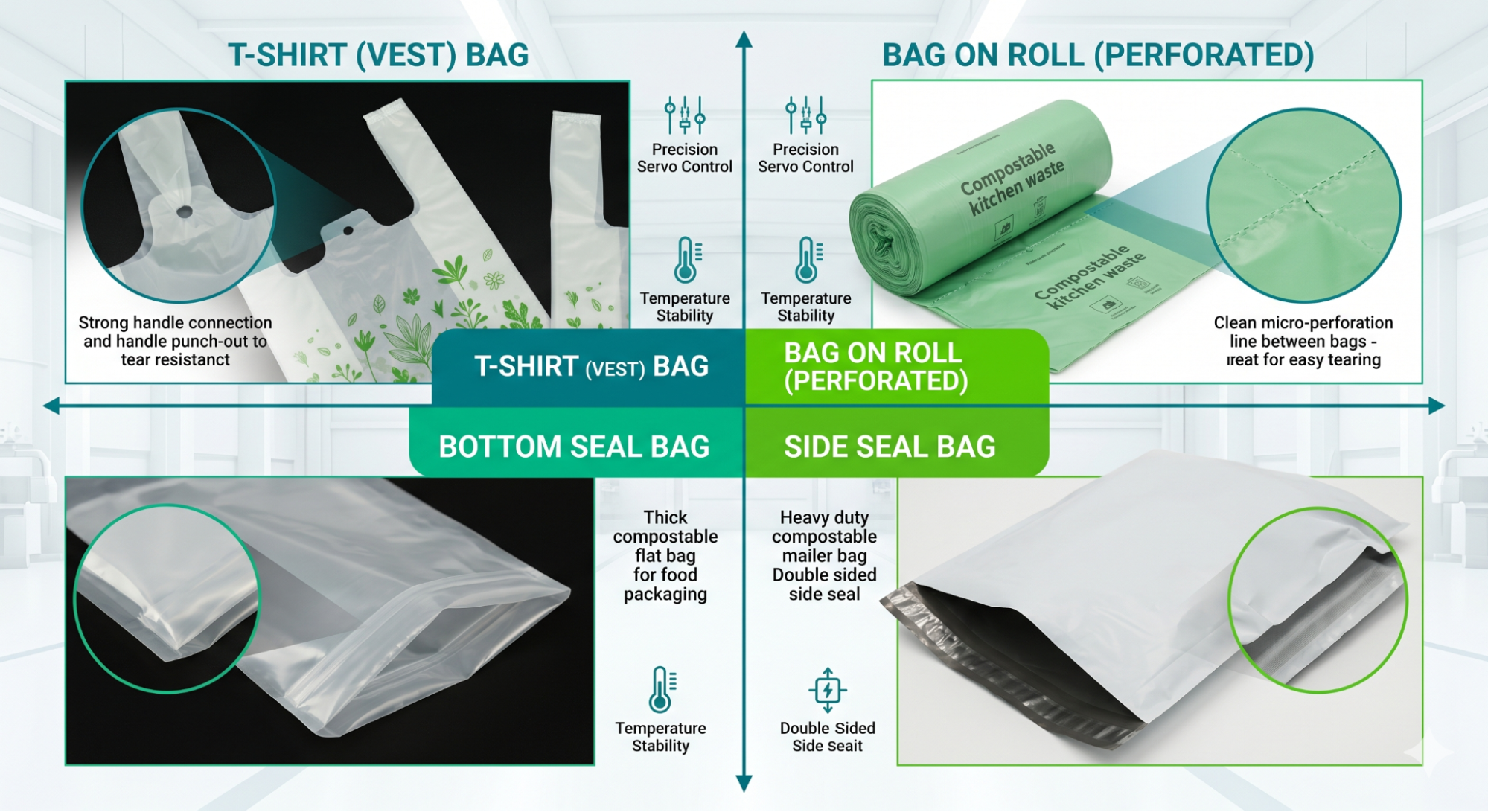
The bottom seal configuration heat-seals the bottom of a folded film tube, producing flat bags or gusset bags widely used for produce, food service, and retail applications.
Compatible eco-materials: PLA/PBAT blends, pure PBAT, and starch-based films (depending on machine configuration).
Best for: Compostable produce bags, food packaging bags, and flat carry bags.
Explore Parkins Bottom Sealing Bag Machines
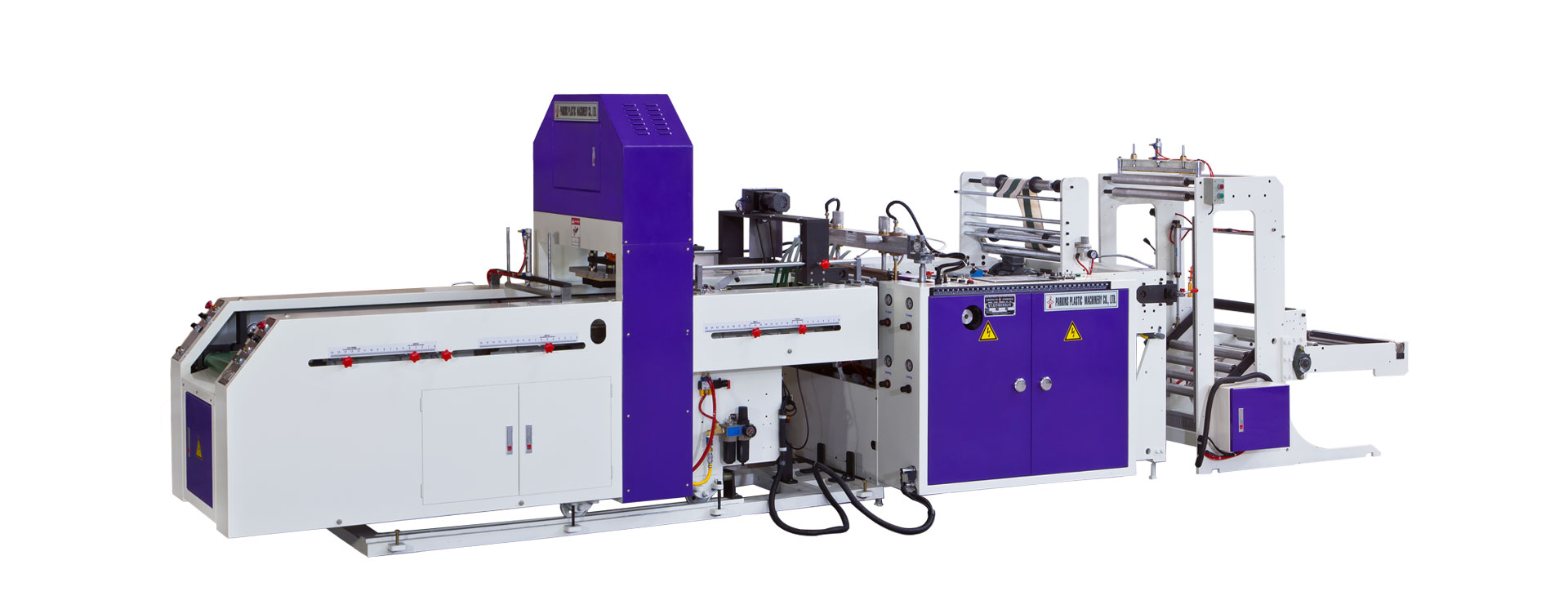
T-shirt (vest) bags are the most common format for retail and supermarket use worldwide. The punched-handle design is directly targeted by plastic bans in many markets — which has made compostable T-shirt bags one of the fastest-growing product categories.
Compatible eco-materials: PLA/PBAT blends, PBAT, NuPlastiQ® blends
Best for: Supermarket checkout bags, retail carry bags, foodservice bags
Explore Parkins T-Shirt Bag Making Machines
Bags on roll — perforated for easy tear-off — are standard for produce sections, foodservice dispensers, and household waste applications. The roll format minimizes handling and packaging material.
Compatible eco-materials: PBAT blends, thin PLA/PBAT films
Best for: Compostable produce bags on roll, trash bags on roll, food prep bags
For a closer look at servo-driven production parameters for compostable garbage bags, see our garbage bag making machine technical guide.
Explore Parkins Perforating Bag on Roll Machines
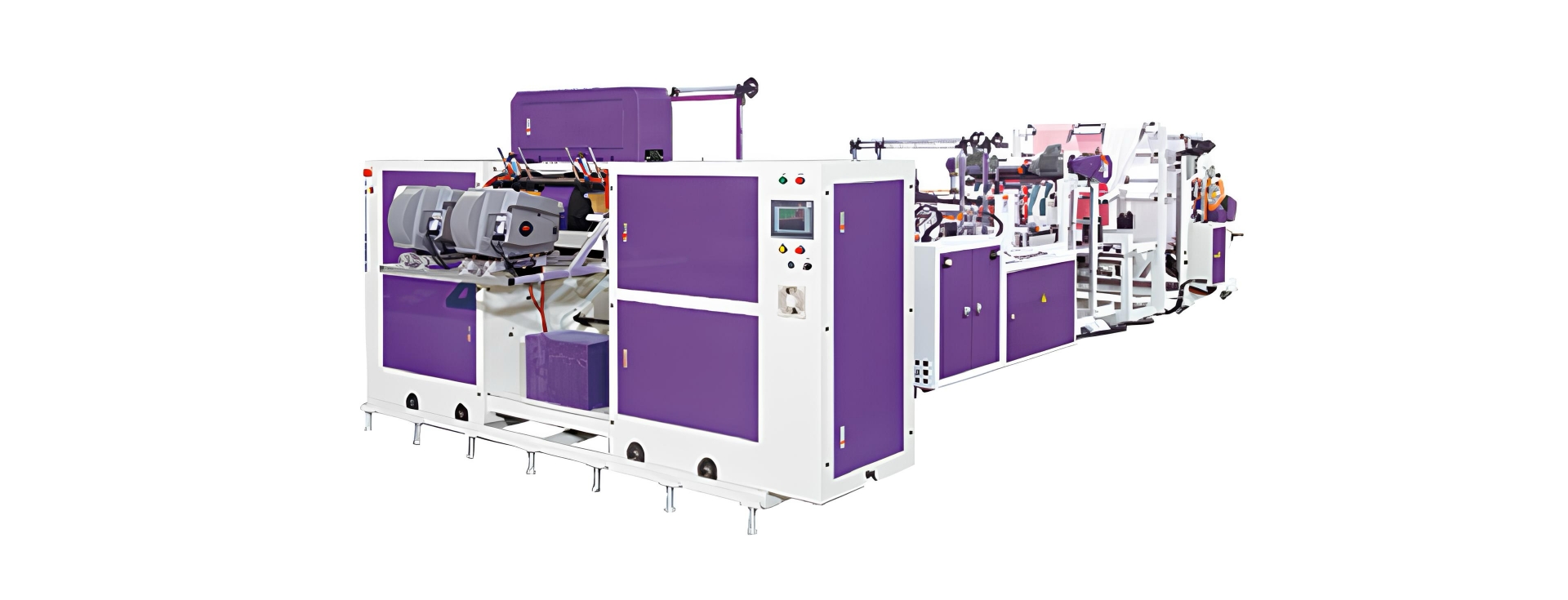
Side seal machines produce bags sealed along both sides rather than the bottom, allowing for wider bag openings suited to heavier-duty applications and certain food packaging requirements.
Compatible eco-materials: PBAT, PLA/PBAT blends at higher gauges Best for: Heavier compostable bags, freezer bags, certain food packaging formats
Explore Parkins Side Sealing Bag Machines
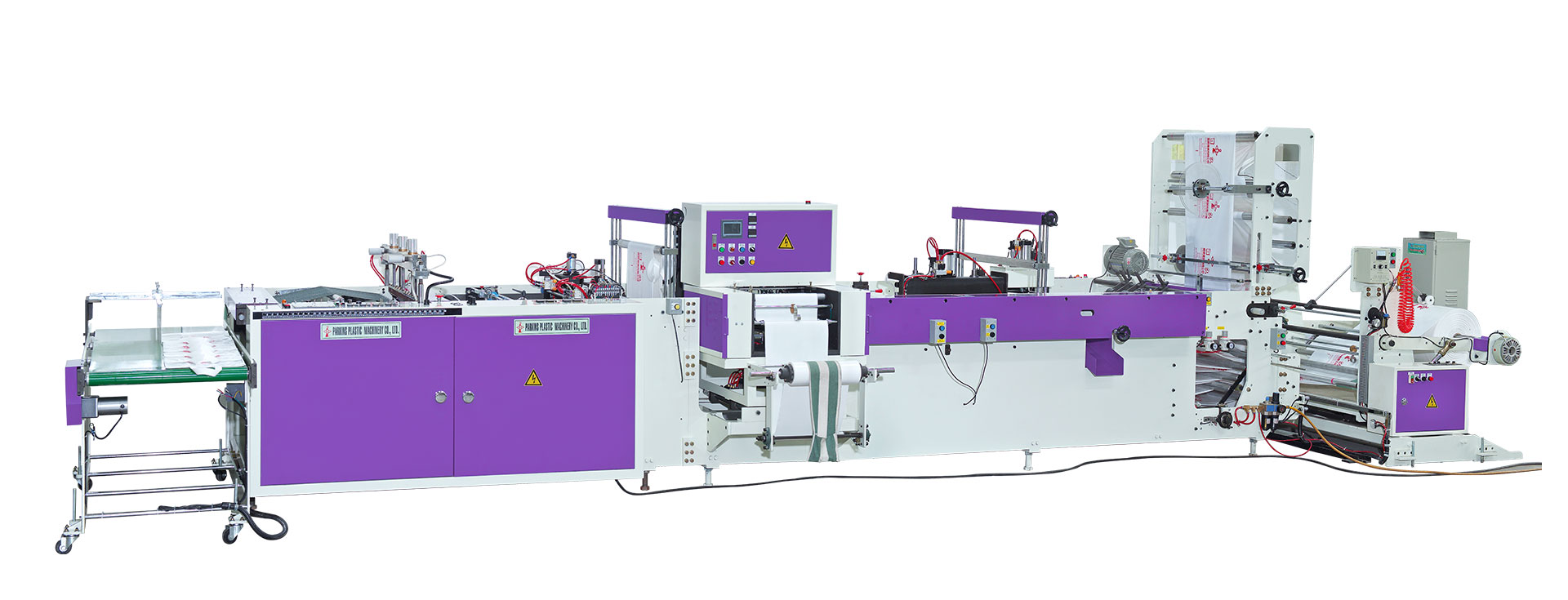
Not sure whether bottom seal or side seal is the right configuration for your bag format? See our detailed comparison of bottom vs. side seal bag machines for a side-by-side breakdown of differences, applications, and selection criteria.
When comparing machines from different suppliers, these are the questions that actually determine production outcomes.
Not all bio-film machines are validated for the same materials. Ask suppliers for documented test results — ideally with physical samples of the finished bags, or video documentation of a production run — produced on the same machine model using your target PLA/PBAT ratio or material. Generic "compatible with bio-films" claims are not sufficient.
PLA-based films require temperature precision within ±2°C across the barrel zones and sealing system. Ask about the type of temperature controllers used, and whether the sealing system uses servo-driven control or mechanical cam timing.
PLA pellets must be dried to below 250 ppm moisture before extrusion. If the machine does not come with an integrated dryer, confirm the drying capacity required and budget for this separately. Skipping pre-drying is one of the leading causes of film defects and excessive scrap rates in bio-film production.
Bio-films are significantly more sensitive to tension variation than PE. A precision servo tension control system — rather than mechanical or manual adjustment — is essential for consistent film feeding and to prevent tearing, especially at higher speeds.
Sealing bars designed for PE bags operate at higher temperatures and with wider tolerance than bio-film applications require. Confirm the sealing temperature range covers your material's requirements (typically 110–140°C for PLA/PBAT blends) and that bar surfaces are Teflon-coated to prevent film sticking.
Bio-film processing typically has a learning curve during line setup. Remote technical support, documented parameter recipes for common material blends, accessible spare parts, and on-site commissioning are the markers of a supplier genuinely equipped to support bio-film customers — not just sell them a machine.
CE certification is mandatory for machines imported into EU markets and is increasingly expected by buyers in other regions as a baseline quality indicator. ISO 9001 certification of the manufacturing facility adds further assurance of production consistency.
Choosing the right machine is only part of the equation. Whether the bags you produce will actually pass compostability testing depends heavily on how that machine is set up and operated.
One of the most common misconceptions among buyers entering the compostable bag market: they assume that certifying their bags is primarily a material sourcing question. In practice, your machine configuration and process parameters directly affect whether the finished product passes testing.
EN 13432 and ASTM D6400 certify a specific product — not a factory. Each bag design (material composition, film thickness, structure) must be tested and certified individually. Changing your film blend, sealing method, or adding colorants creates a new product requiring separate evaluation.
How machine parameters affect certification outcomes:
The certification process itself — from selecting a testing body to submitting samples and managing documentation — varies by market and material. If you're planning your first certified compostable line, contact Parkins to discuss how machine configuration affects your certification pathway from the outset.
Getting the production process right takes preparation — but it's worth it. These are the problems that catch most first-time bio-film operators off guard, and how to get ahead of them.
Film tearing during production Usually caused by insufficient pre-drying (moisture causes PLA degradation during extrusion), too-high barrel temperature, or excessive film path tension. Enforce the pre-drying protocol before every production run, reduce barrel temperatures relative to your PE settings, and ensure servo tension control is active.
Poor or inconsistent seal strength Bio-films seal at lower temperatures than PE. If sealing bar parameters are carried over from PE production, bio-film seals will be over-heated, weakening at the seal line. Calibrate sealing temperature specifically to your material blend and test seal peel strength at startup before running full production.
Film cloudiness or haze Moisture in PLA pellets releases as steam during extrusion, creating internal voids and surface haze. Adequate pre-drying eliminates this in the vast majority of cases. If haze persists after proper drying, reduce barrel residence time by increasing throughput speed during startup.
Dimensional variation in bag length Bio-films have a lower friction coefficient than PE, which can cause slip on mechanical feed rollers. Rubber-coated feed rollers with adjustable grip, combined with optical mark registration for cut point control, address this reliably.
Carbon buildup in barrel PLA and PBAT degrade at elevated temperatures, leaving carbonized deposits that contaminate subsequent production runs. Always purge the barrel with LDPE or a commercial purging compound before shutdown. Never leave bio-film sitting in a hot barrel without production running.
The market these machines serve is growing faster than at any point in the past decade.The regulatory landscape is the clearest driver. The EU Single-Use Plastics Directive has already eliminated lightweight plastic carrier bags across member states. In the United States, California, New York, and over a dozen other states have active plastic bag bans or restrictions. Markets including the UK, Australia, India, and Taiwan have enacted or are implementing similar regulations.
For manufacturers, this creates a durable long-term demand signal. Compostable bags have moved from a niche offering to a baseline requirement for access to regulated retail and foodservice markets. At the same time, the premium for certified compostable bags remains meaningful — in most markets, 20–40% above equivalent conventional PE bags — reflecting both the higher material cost and the compliance value buyers assign to certified products.
Longer term, policy direction points toward higher bio-based content requirements, stricter recyclability standards, and more developed industrial composting infrastructure — all of which strengthen the market position of manufacturers who invest in certified compostable production capacity now rather than later.
Parkins Machinery develops bag making machines for manufacturers across global markets. Our biodegradable and compostable bag machine series — including Bottom Seal, T-Shirt, Side Seal, and Perforating Bag on Roll configurations — has been developed and tested specifically for bio-film materials, not adapted from conventional PE line designs.
What this means in practice:
Browse the full Parkins eco-friendly bag machine range
Still have questions? These are the ones buyers ask us most often.
Some conversions are possible, but results are typically inconsistent. PLA/PBAT requires different screw geometry, precision temperature control, lower processing temperatures, and adjusted sealing parameters that are difficult to achieve reliably on machines designed for PE. For scalable, consistent production, a purpose-configured bio-film machine is the more practical path.
Bio-based bags (Bio-PE, Bio-PET) are made from renewable feedstocks but are not biodegradable — they process on standard PE or PET machines with no special requirements. Compostable bags (PLA, PBAT, PHA) require purpose-configured machines with precise temperature control, pre-drying, and bio-film-optimized tension systems. The machine you need depends on which category you are producing.
Most compostable bags are produced in the 15–40 micron range. T-shirt bags and produce bags typically run at 15–25 microns. Heavier-duty compostable bags — garbage bags, mailer bags — may range from 25–40 microns. Confirm your target machine covers your required thickness range before ordering.
From sample submission to certificate issuance, allow 3–6 months for BPI or European certification, including testing, review, and documentation. Starting with base resins that already hold compostability certification keeps the process at the shorter end of this range.
It is possible with material changeover procedures, but not recommended as a long-term operating model. Contamination risk and the need to purge between materials creates quality and downtime tradeoffs that compound at scale. Dedicated lines for each material type are more efficient once volume justifies it. If you're also evaluating conventional PE or polythene production alongside your compostable line, our industry-by-industry bag machine selection guide covers machine options across both material categories.
Parkins accepts single-machine orders. There is no minimum quantity requirement.
Yes. On-site commissioning, operator training, and initial parameter setup are included. Remote technical support is available on an ongoing basis.
Whether you're evaluating your first compostable bag production line or expanding existing capacity, Parkins' team can help you identify the right machine configuration for your materials, target bag types, and production volumes.Contact Parkins to discuss your requirements.


